
Search web design physical therapy clinic and you'll find page after page of nearly identical clinic sites: a stock photo of someone stretching a resistance band, a mission statement nobody asked for, and a phone number buried in the footer. That's a problem, because almost nobody browsing a physical therapy website is just looking around. They're holding a referral from a doctor, three days post-surgery, or searching from a couch at 9 p.m. trying to figure out who can see them this week. (Nobody Googles a physical therapist for fun.) A slow, cluttered site loses that person before they ever read your credentials, and a fast, clear one turns a frustrated searcher into a booked evaluation.
1. Physical Therapy Website Design Ideas That Actually Book Evaluations
Good web design for a physical therapy clinic starts with one question: what does someone dealing with back pain or a fresh knee surgery need to see before they'll trust you with six weeks of appointments? Usually three things. Which insurance you take, what conditions you actually treat, and a way to book that doesn't require calling during business hours while they're lying on a heating pad.
Most clinic sites skip straight past that. They open with a stock photo of someone stretching a resistance band who has clearly never had a torn rotator cuff, then bury the conditions list three menu clicks deep under a tab labeled "Services." Researchers at Carleton University found that people form an opinion about a website in about 50 milliseconds, which is roughly how long it takes someone to decide your clinic looks credible, long before they've read a word about your treatment philosophy.

2. How Physical Therapy SEO and Mobile Web Design Work Together
Design and SEO aren't two separate projects for a physical therapy clinic. They're the same set of decisions, looked at from two angles. Every choice about page structure, image size, and load time either helps Google understand which conditions you treat, or gets in the way of it.
63% of web traffic comes from mobile, and for physical therapy the share runs even higher, since most people search for help the same day the pain starts, from a couch or a car in a parking lot. According to Google Search Central, Google ranks your clinic using the mobile version of your site, not the desktop one, so a booking form that reads beautifully on a laptop but takes five taps to submit on a phone works against your ranking on top of losing the patient.
Template builders technically render on a phone. They rarely rethink how an intake form behaves for someone typing one-handed because their other arm is in a sling, or how many screens sit between "I found this clinic on Google" and "I have an appointment Thursday."
3. The Trust Signals That Get Someone to Book an Evaluation
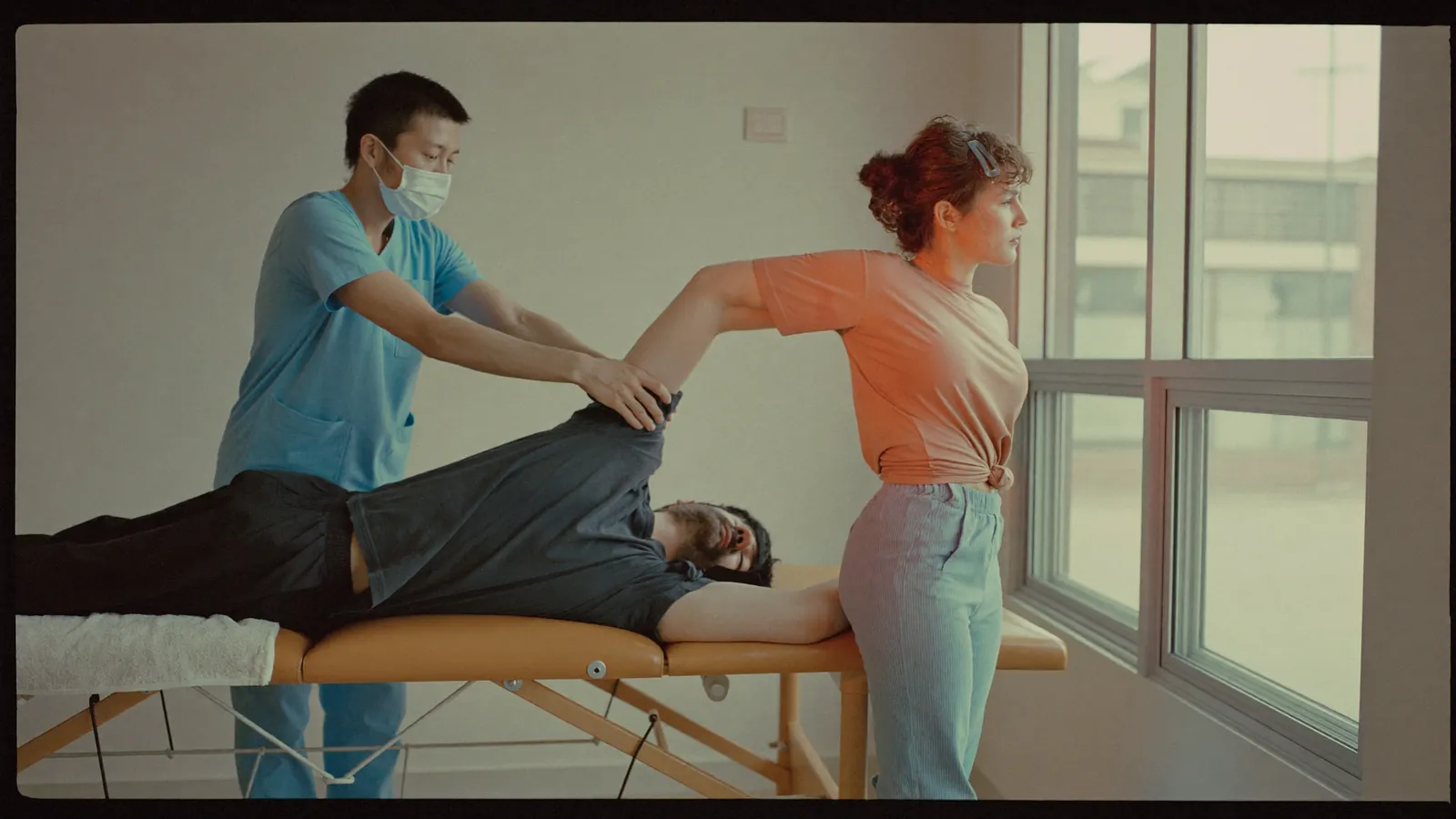
Physical therapy asks for a specific kind of trust. A new patient is agreeing to hand a stranger their recovery, often after surgery or an injury that already knocked their confidence, and most of that trust gets decided before anyone walks through the door. Real photos of your actual therapists, listed with their credentials, carry more weight than a stock photo of a generic clinic hallway. A page titled "What to Expect at Your First Visit" that explains the evaluation in plain language does more to get someone through the door than any paragraph about your treatment philosophy.
4. A Real Example: Same Expertise, Different Results
We've seen this play out directly: a physical therapy clinic with great reviews and fair prices was losing patients to a competitor two miles away whose site was faster, cleaner, and easier to use on a phone, and the fix wasn't a rebrand. It was rebuilding the path between someone searching "physical therapist near me" at 9 p.m. and a confirmed slot on tomorrow's schedule: you can see what that looks like in practice in the work we've done for other local businesses.
5. How AI Search Is Changing Things for Physical Therapy Clinics
People are starting to ask ChatGPT and Google's AI Overviews to find a physical therapist near them, and those tools pull their answer from whichever clinic site is structured clearly enough to summarize. A page that buries your specialties in a PDF or an image doesn't get quoted. A page that states them in plain text, under clean headings, does.
This is where schema markup earns its keep. Marking up your services, your therapists, and your locations in a format search engines and AI tools can parse directly means you show up in an answer instead of getting skipped for the clinic down the street that bothered to add it.
Physical Therapy Clinic Website: Template Builder vs. Custom Design
Here's how the two options actually compare once a patient is involved.
| Feature | Template Builder (Wix, Squarespace) | Custom Design |
|---|---|---|
| Upfront cost | Low ($20–$60/month) | Higher (one-time project fee) |
| Mobile performance | Basic | Fully optimized |
| SEO capability | Limited | Full control |
| Unique to your brand | No | Yes |
| Load speed | Average | Optimized |
| Scales with your business | Limited | Yes |
| Long-term ROI | Lower | Higher |
A clinic that outgrows a template usually finds out at the worst time, which is one reason we build our web design services around what your practice will need in two years, not just at launch.
What Every Physical Therapy Clinic Website Needs
- A plain-language conditions list so a patient searching "physical therapy for sciatica" can confirm you treat it in five seconds, not five clicks.
- Real photos of your actual therapists and clinic, credentials included, instead of stock photography of someone else's gym.
- Insurance information visible without a phone call, since that's the single biggest reason a booking gets abandoned halfway through.
- An online booking system that works one-handed, because a meaningful share of your patients are typing around an injury.
- Page speed under 2.5 seconds on mobile: check it free at PageSpeed Insights.
- A "what to expect at your first visit" page that answers the anxiety questions before anyone has to ask.
Frequently Asked Questions
What should web design for a physical therapy clinic include?
It should include a plain-language list of the conditions you treat, real photos of your therapists with their credentials attached, and a booking system that doesn't route someone into a "we'll call you back" form. Insurance information belongs on the page itself, not behind a phone call, since that single detail decides more bookings than anything on your homepage.
Does web design affect SEO for a physical therapy clinic?
Page speed, mobile usability, and how clearly your pages are structured all feed directly into where you rank for searches like "physical therapist near me," so design and SEO end up being the same project wearing two names.
What makes a good physical therapy clinic website?
A good one leads with reassurance instead of jargon: real photos of the actual clinic, a plain-English conditions list, and visible insurance information. It loads fast on a phone, answers the "what happens at my first visit" question before anyone has to dig for it, and it does not, under any circumstances, open with stock footage of a resistance band. (We checked. Nobody has ever booked an evaluation because of a resistance band.)
Why is mobile design important for a physical therapy clinic?
Because that's where the decision gets made, usually the same day the pain starts, from a couch or a parking lot between errands. Google also ranks you using that mobile version of your site, not the desktop one, so a booking calendar that needs pinching and zooming costs you the ranking and the patient in the same visit.
How much does web design cost for a physical therapy clinic?
A professionally built site for a physical therapy clinic usually runs a few thousand dollars, depending on how many locations and specialties you're featuring and whether you need a booking system built in. Template builders cost less upfront and tend to cost more over time in patients who never scheduled. If you want a real number for your clinic, reach out here.
The Bottom Line
A great website for a physical therapy clinic does one job: it takes someone who is in pain and unsure who to call, and gets them to a confirmed appointment before they open a competitor's site instead. Everything else, the design and the SEO alike, is in service of that one moment.
The question was never whether your website matters. It's whether the one you have right now is doing that job, or just sitting there looking clean while people quietly click away to book with someone else. (Your resistance band photo isn't the problem. The five clicks to find your phone number is.) If you're not sure which one is true, let's find out.